

April 15, 2026
Thompson Italian, Alexandria, Virginia
Ah, tax season. It’s like the Olympics for accountants (minus the cool ski lift and shiny medals). If you know anything about restaurant accounting, you know there are a lot of moving pieces. And keeping track of everything can get pretty hectic for both restaurant operators and accountants. So how do restaurants stay compliant amongst the chaos of tax season? How does digitizing your restaurant’s back office play a role in all of this? And how can we install one of those ski lifts in the restaurant (asking for a friend)?
When it comes to destressing tax season, one of the first steps to take is a look at your back office. Your back office is a hub for so many tax-related processes, and it’s important to make sure it’s in tip-top shape. But what happens when manual processes are slowing you down, or worse, leading to inaccurate numbers?
![[Download Now]: Food Waste Calculator](https://no-cache.hubspot.com/cta/default/6423873/ac4e1e9a-7df9-4f58-b946-4bd3e60ec22f.png)
When you digitize, you simplify your back office processes, avoiding financial hiccups and steeper compliance-related consequences. 
To explore a few ways digital back office solutions can help your restaurant stay compliant, we’ve asked one of our accounting partners with over a decade of experience in restaurant accounting and bookkeeping, Thomas Fontes from Accounting Services Unlimited (ASU), for his top tax season tips. Now let’s get into a few tips to help keep your back office compliant and how digitizing can keep your processes running smoothly.
Four processes restaurants should digitize now to stay compliant
1. Recording sales taxes
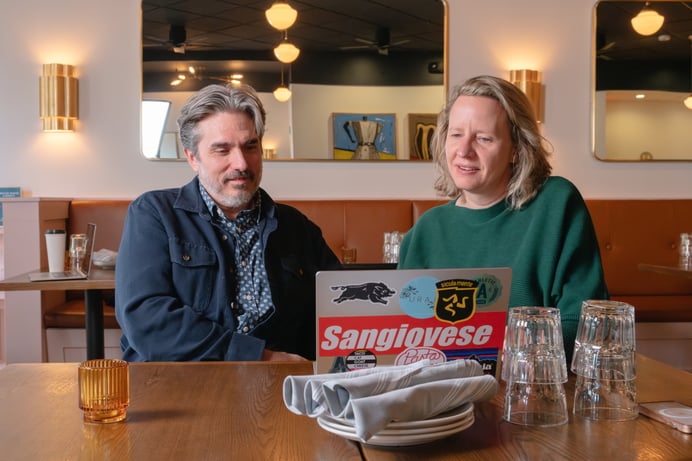
Thomas’s take✨: “The number one thing to digitize is going to be sales taxes. Make sure you’re not manually pulling numbers from the cash register or trying to calculate them yourself. A lot of POS systems don't do it or can do it wrong. This is especially true if there’s a county or parish tax, so finding a tool that helps digitize this process provides a real, tangible benefit.”
2. Payroll
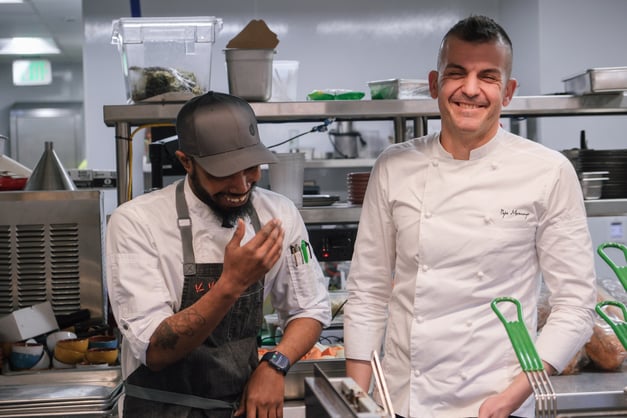
Thomas’s take✨: “Implementing tools like biometric systems can help prevent issues like buddy-punching and ensure accurate time tracking, and you’ll want to make sure all this information is entered digitally into payroll processors like ADP or Paychex. Making sure your payroll process is digitized so it can’t be manipulated is a big deal. This is especially important with a few of the new laws now, like the Big Beautiful Bill, because there’s no longer a tax on overtime or on tips over a certain amount, which is causing new regulations in some states."
3. COGS
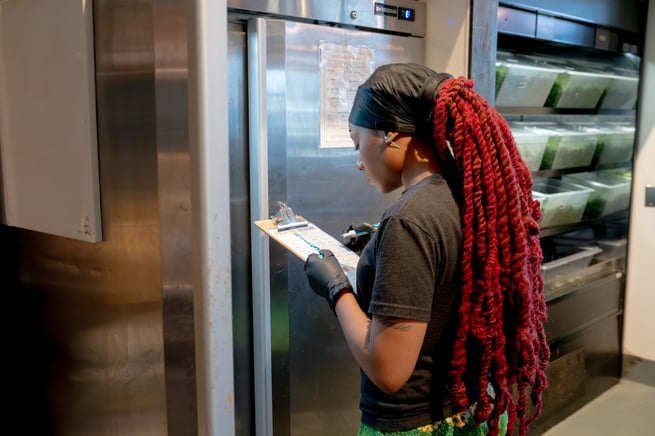
Thomas’s take✨: “A digital breakdown of your COGS is super important if you want to be able to accurately calculate plate cost. It’s essential to have a clear breakdown of ingredients and the percentage of overhead being allocated. You also want to make sure this information is secure and can’t be manipulated. So when you use any type of software, like when you're using MarginEdge, it accounts for these details and locks them down to prevent tampering. This is particularly important for tracking food costs accurately and maintaining control over your expenses.”
4. Balance sheet
Thomas’s take✨: “Your balance sheet is crucial to ensure that all financial activities, especially those involving partners or bank loans, are consistently tracked, especially once you digitize.
For example, if an owner takes money in or out of the business, the balance sheet must be updated accurately. This is not a task that should be handled manually or by just anyone. If you take out an additional loan for new equipment or an expansion, your balance sheet needs to reflect this in real time, and it should be managed through a reliable system, not manually.
For owners, it’s especially important to document any money taken out of the company properly. Avoid writing checks directly from a checkbook or handling these transactions by hand. Owners are often the biggest culprits when it comes to poor documentation. For instance, if you buy supplies for an event with a credit card and then write yourself a check to reimburse the expense, it creates a messy and untraceable paper trail.
To prevent issues, ensure all financial activities are recorded in a system that is transparent, accessible to the right people, and secure from manipulation. This level of accountability is essential for maintaining financial integrity.”
Now that we’ve covered how digital back office tools can help with compliance, we’ve got one more question for Thomas:
So, what are the most common mistakes restaurants should definitely avoid this tax season?
“There are two big ones: The most common one right now is when a restaurant has a bad month, and begins to think that sales taxes or payroll become optional. Like you know, ‘I just won’t pay it right now and afford it later,’ mentality. You’ve been consistently collecting sales tax all month, but when it’s time to pay, you either don’t have the money or think you don’t. You'd rather pay your vendor or something else, and you think that the sales tax is just extra cash that you can dip into. The penalties for this are super high.
You're better off paying your sales tax with a credit card than you are dealing with the penalties, interest and the threat of an audit. The number one reason restaurants get audited is sales tax audits or workers’ compensation audits.
Also, avoid filing an extension if you don’t have to. Extensions are extensions to file, not to pay. If you say, ‘Oh, I’ll just file for an extension and deal with it in November,’ you still have to pay the taxes you probably owe. And never fall behind on payroll. Those waiters and back-of-house staff will come looking for their money.
Lastly, don’t do four months' worth (or more) of the books all at once. It’s easy to forget about a lot of small expenses that happen on a day-to-day.”
As a restaurant operator, you’ve already juggling a lot. When we asked a few of our [me]ople (a nickname we have for our incredible staff) to describe tax season during their time in the restaurant world in one sentence, one answer was, “Talk to my accountant/bookkeeper, I’m too busy running a restaurant.”
Don’t let tax season add stress on top of an already full plate. When you digitize your back office, you simplify your processes and get back precious time to focus on what you do best: running a restaurant. With the right processes (and the right digital tools), you can take your tax season from feeling like a thriller movie to a fairy tale.
