

February 13, 2026
Oak and Ola, Tampa, Florida
Imagine you’re planning a surprise party for your friend. On the day of the party, you realize you forgot to order the birthday cake, you sent a few invites to the wrong address and you accidentally got flowers that your friend is allergic to. Yikes!
When it comes to planning, there are a lot of factors to juggle to make sure things run smoothly. And for restaurant operators, creating a plan for your business without tracking your financial metrics can lead to some not-so-pleasant surprises (birthday cake not included).
As a restaurant operator, you probably already understand how important financial planning is for your business. If you want to scale, it’s a non-negotiable.
But how exactly do we know which metrics are most important? How do different financial metrics relate to each other, and what are the consequences of not watching your numbers closely enough?
![[Download Now]: Food Waste Calculator](https://no-cache.hubspot.com/cta/default/6423873/ac4e1e9a-7df9-4f58-b946-4bd3e60ec22f.png)
Before we get into which numbers every operator should track, let’s take a look at a few of the reasons tracking your restaurant’s financial metrics is so important to begin with.
3 reasons restaurant operators should keep track of their financial metrics
- Be prepared - Tracking financial metrics ensures you’re ready to handle the unexpected challenges that come with running a restaurant, like economic downturns or rising costs. It also provides a clear understanding of cash flow, helping to avoid surprises and maintain stability.
- Plan for the future - Monitoring financial data allows operators to identify trends and opportunities, making it easier to scale, expand, or invest in new ventures. It also helps set realistic goals and allocate resources for long-term growth.
- Financial clarity = financial confidence - When you’ve got an accurate snapshot of your restaurant’s finances, you can make informed, strategic decisions. Confidence in your numbers reduces (some of) the stress and gives you time back to focus on growing your business with clarity.

Now that we’ve tackled why it’s important, let’s get into the financial metrics every operator should be keeping an eye on. We’ve asked one of our accounting partners, Thomas Fontes, the owner of Accounting Services Unlimited (ASU), based in New Orleans, Louisiana, for the inside scoop on all things restaurant financials.
With over a decade of experience helping countless restaurants and businesses with their accounting and bookkeeping, Thomas has a plateful of tips and tricks for restaurateurs at every stage of their business.
Five financial metrics every restaurant should track
1. COGS
Thomas’s take: “COGS are important for a lot of reasons. You have to make sure your numbers and your costs are updated regularly because in the environment we’re in now, every time somebody buys food, the prices change. You can buy it every day, and the price of eggs and rice last week will not be the same price as eggs and rice this week.
One mistake some restaurants make is looking at whatever they bought last month, looking at their P&L at the end of the month, and saying, ‘Okay, my cost of goods were 29%, or 31%, or 25%.’ They’ll take a guess at what changed as opposed to knowing what specifically went up or down.
Your portion controls have a lot to do with it, and also your pricing. You have to make sure that once you figure out where the fluctuation is, what the top is, and what the bottom is, your pricing will always cover you so that you can stay below that 30 to 29% range.”

2. Profit and loss statement (P&L)
Thomas’s take: “A lot of accountants and CPAs will tell you that all companies are measured by their balance sheet, what their liabilities are and what their assets are. I am the opposite. I'm all about the P&L. The P&L deals with what you can hang your hat on today.
In other words, most restaurant owners are month-to-month, so maintaining an accurate statement is critical. Your P&L acts as your financial scoreboard. It tracks where every dollar is allocated, which is exactly what's going to tell you how much you spend on everything. It allows you to move beyond guessing and instead use hard data to identify exactly why your net profit fluctuated and where you need to adjust your strategy for the following month. You’ll be able to see spending by category, and say, ‘Oh, look, my sales went up or down.’"
3. Labor costs
Thomas’s take: “Similar to our last point, all your labor cost information is on your P&L. For example, when you're looking at your payroll, and you break down the payroll per person in your P&L, that also tells you who's working the most.
I’d recommend seeing if you're paying anybody overtime. Because if you have people racking up overtime, it likely means you need to hire more people. And of course, there’s the bottom line, which tells you your percentage of profit.
When it comes to labor costs, any business should aim for around 25-30% of sales. In the restaurant industry, it is a lot more obvious if you have too many people and not enough customers. So those numbers jump up on the P&L, and you have to make sure you’re keeping your labor costs where they’re supposed to be.
Every once in a while, you've got to send people home, and every once in a while, you're going to have to call up those people and say, ‘Hey, guys, we've got a mad rush going on, and we've got reservations for the rest of the night. Can you come in?’
Having your finger on your labor cost and payroll, making sure that you have people that you can send home or call in or communicate with the staff on hand, allows you to improve operational efficiency, control expenses and ensure that your business is neither over- nor understaffed."
4. ROI
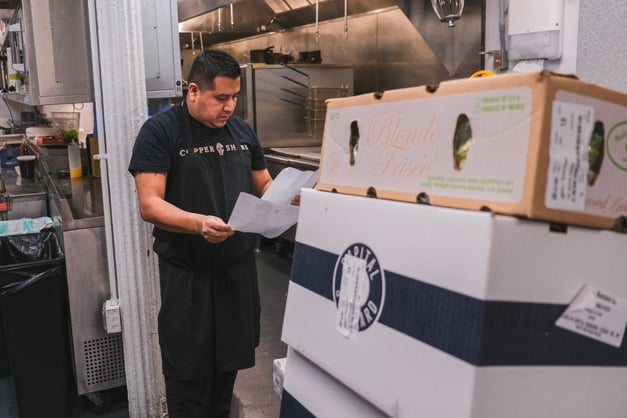
Thomas’s take: “Restaurants can take a long time to see real ROI. Unless you're walking into a situation where the restaurant's already built, it takes a couple of years to see a return on investment. Every once in a while, you'll get somebody who does a great job of marketing and investing on the front end. So by the time they open up, you've got a line before anybody's tried your food. But whatever you put in advertising for a restaurant, you will get back on the other end.
Just like with your labor, anything else, the more you invest in your people, the faster you'll see your return on investment.
The other thing is that it also depends on how you opened. Did you open up with a bunch of investors? Did you borrow money from the bank, or did you use your own savings? That'll tell you whether your ROI is going to be in the short or long term.”
5. Gross profit margin
Thomas’s take: “That goes right to what we mentioned at the beginning when we talked about COGS. The P&L tells you exactly where you're at for expenses. That's also where I like to look for tax liability and self-employment tax, because that's where accountants take that number from.
If your COGS are around 29-32%, the gross profit margin should be between 68-71%. If that gross profit is closer to 60 or 50%, you've got a problem.”
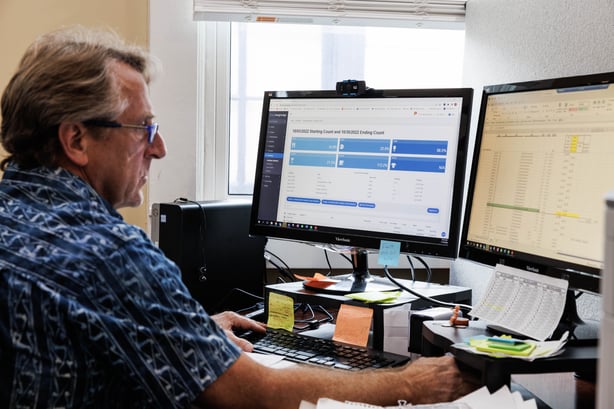
We had such a great conversation with Thomas, we decided to ask him two bonus ✨ questions:
If you had to narrow down to one financial metric that you feel like operators cannot live without, what, in your opinion, would that metric be?
Thomas’s take: “It would have to be your cost per customer, which you can determine by looking at the number of customers you have vs your cost of goods. You see how many customers you have come in the door, and you measure it against your cost of goods. It really tells you where your problem lies.
Operators should aim for a cost of goods sold (COGS) ratio to stay around the percentage range I mentioned earlier, below that 30% range, while ensuring that customer volume generates enough revenue to cover fixed costs and desired profit margins.
By maintaining a healthy balance between COGS and customer volume, operators can identify waste or inefficiencies and make informed adjustments to improve profitability. Once you’ve got that number down, everything else makes a little more sense.”
What are a few early warning signs that a restaurant operator is not tracking their metrics as closely as they should be?
Thomas’s take: “That would be your food cost. When your bank deposits are the same, but you see your delivery man coming more often, something’s gone wrong. If you just started a restaurant, the owner needs to be there pretty regularly. After the first couple of years, after you've already gotten over the hump where you know how many people are going to come in, how much food you need, and what your costs are, then it's just tightening the numbers—like making sure your portions are controlled. You know, take a look at the trash can; do you see a lot of food in there? Things like that.”
Whether you’re a seasoned restaurateur or just starting out, keeping track of your financial metrics is central to your restaurant’s success. The great thing about restaurant financial metrics is that a lot of them work in tandem. Once you’ve got a grasp on one, the others are easier to handle. Outside of keeping track of your finances, choose an accounting method (and an RMS,*wink*) that makes tracking your numbers easier. With the right steps, your restaurant's financials can go from looking like mystery meat to filet mignon.
