

March 16, 2026
We decided to sit down with Chip Klose, the host of Restaurant Strategy Podcast, with over 25 years of hospitality experience, for tips and tricks operators can use when the weather slows down business. Let’s take a look at 5 quick tips you can use this winter, so your sales don’t slip faster than trying to walk down a sidewalk-turned-ice rink.
%20(1).pdf.png)
![[Download Now]: Food Waste Calculator](https://no-cache.hubspot.com/cta/default/6423873/ac4e1e9a-7df9-4f58-b946-4bd3e60ec22f.png)
The playbook: A winter restaurant survival guide
Tip #1: You need a (proactive) plan
“The number one advice I always give operators is: you need a playbook, you need to be prepared. We don't always know when bad weather will happen, but we know that it will. You need a list of protocols and procedures that you refer back to every season. That way, when the first snowstorm of the season hits the following year, you don’t have to wonder what you’re going to do. You’ll have the presence of mind to say, ‘Whoa, what if we just dusted off that playbook?’”
Tip #2: Meals to go / "take and bake" kits
“I remember a few years ago working at a restaurant in NYC. In the summer, everyone would sit outside and eat, but when it got cold, and people had to come back inside, we lost all of that business. October through January were hard.
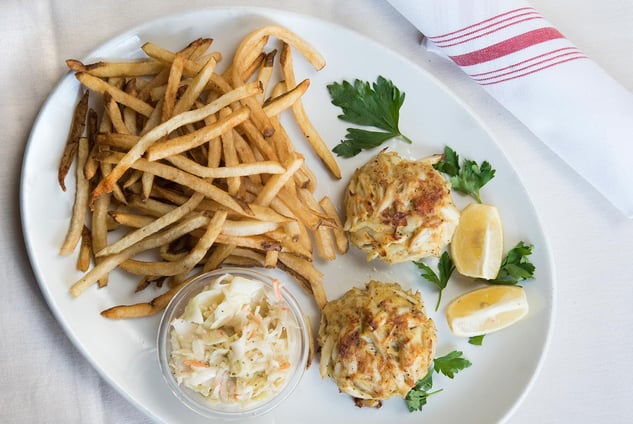
So, we came up with take-and-bake meal kits. It was a disposable roasting pan with a meal and simple directions: cover it, bake it in your oven for 45 minutes, take it out and enjoy. On Fridays, we did roast chicken. Saturdays were for lasagna, and Sunday was a tenderloin roast. We pre-sold these. So every Monday we would say, ‘Hey, this Friday, Saturday, Sunday we're doing roast chicken, lasagna and tenderloin roast.’ It was a one-pot wonder. It was very easy. The idea was that we could sell 150 of these a week at $75. It was a meaningful amount of revenue.”
Tip #3: Have a few plays in your back pocket
“I always use the football analogy. When we see the storm coming, we should be able to say, ‘Call the audible, call the play. Okay, let's put the take-and-bake meal kit plan into place.’ So, when the weather got bad the following year, we had the landing page on our website ready, acting as an e-commerce site for people to order take-and-bake kits. People could pre-purchase, pre-order and select a pickup time. So, we're paid ahead of time, we have all the orders and we can just fulfill the orders as they come in.
Let’s say there’s a big storm coming in on Sunday. We send three or four emails about the take-and-bake kits that go out rapid fire over the course of the next few days. We just try to drum up as much business as possible. We talk to every single guest who's dining about the meal kits. Let’s say that play isn’t working, and there’s bad weather on the way. Let’s get in a huddle and call a play to figure out the best plan for our business. We have at least 4 others in our back pocket in case the first doesn’t work.”
Tip #4: Pulling the fire alarm
"When bad weather hits, we think, ‘Is that safe for our staff to come in and drive through the snow?’ When you see the storm coming, take a look at who was originally scheduled to work the next day. Let’s say you see the snow is going to start on Saturday night. Find two cooks and a server and a bartender, or two cooks, a bartender, and a manager, reach out and say, "Hey, you're scheduled for Sunday. I'm going to get you a hotel room right across the street. So, you drive down here, you park your car, and I'm going to put you in overnight.
Recently, I was out of town. I was staying at a hotel where maybe 10 rooms were booked out of 150, and all the restaurants on that block closed. But they could’ve put a handful of people in the rooms, and maybe even brought their family along. You negotiate with the hotel for a discounted rate with the promise that you will be consistent, that whenever it snows, you’ll put your staff up there.
This does three things: Staff don’t have to worry about driving on slick roads, they can still make money and don’t miss a paycheck, and customers have somewhere to go if they’re getting stir-crazy in their homes."
Tip #5: Recurring customer incentives (that aren't just discounts)
"For most restaurants, your sales between January and March are going to dip. Who’s going out to eat on January 23rd? Or March 8th? You need to give people a reason, instead of relying on deep discounting. When we discount, we're operating under the assumption that the only reason people aren't coming is that it's too expensive, which isn’t always the case.
I worked at a restaurant where there was always a dip in business from August 15th to September 15th. So, we put together a special menu that was a late summer harvest tasting menu. It was five courses and you had choices in every course. We worked with our partners to feature hyper-seasonal produce and products. We’d announce, ‘We're working with local farmers, purveyors and fishermen. It's at a lower price point, so you won’t blow your budget.’
It was a way to mitigate the dip in business. For example, let’s say I run a Northern Italian restaurant. Maybe every January, I do a roast suckling pig every weekend for that month. And it's first-come, first-served, limited amount. Sometimes we can even charge more than our regular per-head cost because it's something unique and special. So, give people a reason to come out."
Whether you’ve braved many winters before or you’re new to the freezing temps, with the right game plan, the weather doesn’t have to disrupt your business. Don’t let winter drop your business into the negatives. When you plan ahead of time, communicate early and have a few extra “plays” in your back pocket, you’ll be prepared when harsh weather hits.
About the author
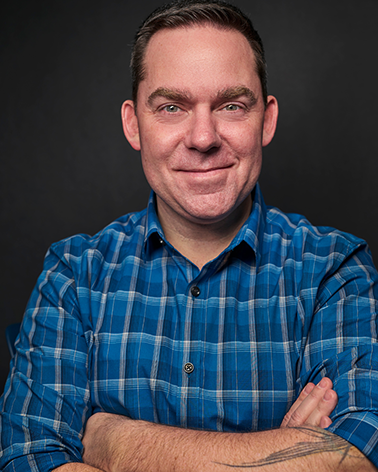
Chip Klose is the host of the Restaurant Strategy podcast, author of The Restaurant Marketing Mindset, and founder of the P3 Mastermind. Over his twenty-five years in the industry he's opened numerous Michelin-starred restaurants and collaborated with three different James Beard Award–winners. In 2022 he earned his MBA in Food Marketing, graduating top of his class at the Haub School of Business, Saint Joseph’s University (Philadelphia, PA).
His goal in all of this is simple: to help owners and operators build more profitable restaurants.