

January 15, 2026
The Hive, Portland, Oregon
Picture this: you own a beautiful garden. You’d love to see it flourish more (and not just so you can roast sunflower seeds in the summer). The only issue: you have no idea what kind of products your garden needs, or how much, or even the names of all the different plants, and now things aren’t turning out too well. This is what it’s like to try scaling your restaurant business without being able to trust and understand your numbers (and don’t worry, no sunflower seeds were harmed in the making of this analogy).
One of the most impactful decisions a restaurant operator can make for their business is deciding whether or not it’s time to scale. There’s a lot to consider. Are performance and profit consistent? How will new locations impact sales? Do you have a strategy? Why do you want to scale to begin with?
Turns out, the missing puzzle piece to a lot of these questions is hiding in plain sight: your numbers. When it comes to scaling your business, it’s crucial to have accurate, up-to-date data. The more accurate your numbers are, the more trustworthy they’ll be when it comes to making big business decisions. After all, who wants to build on a foundation that isn’t trustworthy?
![[Download Now]: Food Waste Calculator](https://no-cache.hubspot.com/cta/default/6423873/ac4e1e9a-7df9-4f58-b946-4bd3e60ec22f.png)
Before we explore a few of the reasons having the right numbers is so important, let’s take a look at a few consequences of having the wrong ones.
Three consequences of scaling without the right numbers
- Over (or under-) estimating demand - Your numbers play a crucial part in understanding and predicting demand, potential sales and needs for your business. With the wrong numbers, inaccurate forecasting can run you the risk of over- or under-hiring, inventory levels that end up costing you money or customer satisfaction or expanding into spaces that don’t work for your brand. Reliable data helps you strike the right balance, ensuring you’re ready to meet customer needs without unnecessary waste.
- Scaling at the wrong pace - Scaling at the wrong pace can have serious consequences for your business. Expanding too quickly without a clear understanding of your financials, customer demand or operational capacity can lead to overextended resources and a decline in service quality. Scaling too slowly can cause your business to lose momentum or miss opportunities for growth. With the right numbers, you’ll know exactly where, when and how fast to scale your business.
- Financial instability - Without the right numbers, it’s impossible to track and maintain an accurate cash flow for your business. Without an accurate method for tracking cash flow, you’re likely to experience unplanned expenses and underestimated costs. Additionally, the time it takes for a new location or service to become profitable can leave you covering operating costs for longer than anticipated, putting pressure on your cash reserves.
Now that we’ve covered a few potential consequences, let’s look at a few reasons that scaling with trustworthy numbers is the best combo since steak and potatoes. (PS: Listen to our Science of Service episode with Andy’s Pizza to see how they scaled without compromising on quality.)
5 reasons having trustworthy numbers is key to scaling your business
1. To raise capital
Whether you are funding your expansion organically or looking at outside investment, such as Private Equity or taking on bank debt, having your house in order is critical.
In any scenario, but particularly if you are growing organically, you want to ensure every cent invested from the profitability of your existing restaurants is used wisely. Without the right discipline and rigor in the numbers, you run the risk of burning cash inefficiently and “growing” problems. Remember, a 2% margin issue on a single unit operation is very different than 2% on a multi-million dollar multi-unit restaurant. When you are growing organically, there’s less free cash available and less room for error.
If you’re looking to get your foot in the door and partner with private equity, you need solid financials, processes and the ability to demonstrate faith in the existing and projected financials. A solid foundation = trust and commitment to your future plans
If you are looking to fund expansion through loans, you will likely be required to report on covenants (aka: providing financial statements to prove you’re staying within the rules of your lender). Having the discipline and solid foundation in the numbers helps you to grow and meet regulatory reporting requirements with ease, instead of chasing your tail.

2. You'll have an effective scaling strategy
There are a lot of numbers to understand about your current business operations before scaling. Key metrics like your sales volume, Cost of Goods Sold (COGs), Prime Costs and overall cash flow are going to determine both the speed and extent of scaling your business.
Having a clear understanding of your numbers allows you to build a scaling strategy that is specific, measurable and repeatable. The more tailored your strategy is to your restaurant, the better. In addition, building and honing accurate sales forecasts allows you to better understand your operational costs and revenue projections, meaning you’re building your strategy based on historical data, not gut feelings.
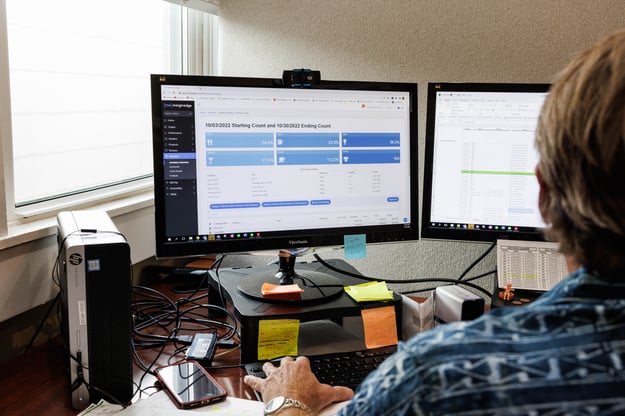
Take the first step✨: Make sure you’ve invested in an automated and effective RMS system. This will give you daily and weekly reports about the numbers that can make or break your restaurant operations. Once you have a foundation where your numbers are accurate and up-to-date, you’re ready to start researching expansion models and create a growth-oriented business plan.
3. Standardize operations
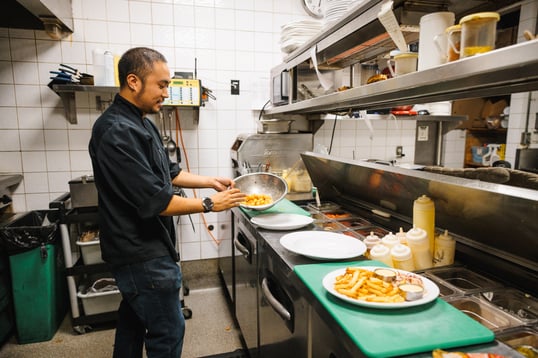
Trusting your numbers goes hand-in-hand with another key aspect of scaling your restaurant: standardizing your operations. Tracking performance metrics like order accuracy, average service time, customer satisfaction scores and inventory turnover allows you to see what’s working and not working in your business, helping you implement standard operational procedures like opening and closing checklists and food-handling techniques.
Additionally, tracking numbers like food waste allows you to see where slip-ups in portioning and inventory management may be happening, letting you know where new procedures or new tools may be necessary.
Take the first step✨: Research, research, research. Take a look at your historical numbers when it comes to performance and prep or cooking techniques to see where you’re hitting the mark, or where you can do better.
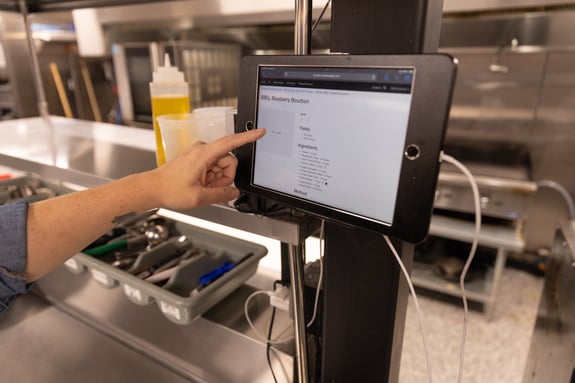
Additionally, work with your staff not only to standardize training, but also to get an understanding of what processes are working and where there may be room for improvement. Consider investing in an automated recipe management tool that can make standardizing recipes easier.
4. Plan for rainy days
Trusting your numbers allows you to identify potential financial risks and prepare for them in advance. For example, cash flow analysis can reveal recurring dips, helping you to plan reserves or secure credit. Keeping a close eye on your profit margins over time helps identify shrinking margins or underperforming products, prompting adjustments in pricing or operations.
Expense tracking can uncover unexpected spikes or inefficiencies, while scenario planning using historical data prepares you for downturns or cost increases. By making number analysis a regular part of your routine, you can plan ahead and stay financially resilient.
Don’t forget to keep your accounting team in the loop. Strategizing with your accounting team can give you an even closer look at the financial impact of your strategies. For example, they can help you analyze and experiment with the cost-effectiveness of adjusting your spend in things like labor or supplies, or the financial impact of tweaking operations, like adjusting service time. Additionally, they can identify trends in inventory spending to ensure you're not over- or understocking key items, which can hurt your bottom line.
It can also help with strategic decision-making about cutting costs or reallocating resources, all without jeopardizing long-term growth. Trusting your numbers gives you the confidence you need to navigate uncertainty and keep your business on track, no matter the circumstances.
Take the first step✨: Take a(nother) close look at your financial data, including cash flow statements, profit and loss reports and expense tracking. Highlight a few areas where you can cut unnecessary costs and set realistic savings goals to build an emergency fund. Additionally, consider using an automated budgeting tool to help you monitor your finances regularly and ensure accuracy.

5. Improved cash flow management
Like we’ve mentioned before, having a bird's-eye view of your numbers gives you the clarity you’ll need to scale your restaurant, including happy consequences like an improved cash flow. When you trust your numbers, you’ll have fewer financial surprises and a tighter grasp on your restaurant's financial wheel. An improved cash flow leads to an improvement in overall operations, something you want to make sure is smooth sailing before you start scaling.
If you’re considering scaling your restaurant with the help of private equity, having accurate and reliable numbers is non-negotiable. Private equity teams rely heavily on data to assess the health and potential of your business. With the right numbers (and the right tools along the way), every transaction, inventory adjustment and performance metric is recorded and easily accessible.
This means you can quickly generate detailed reports that provide a clear picture of your restaurant’s financial and operational performance. When your numbers are accurate and well-organized, it builds trust with potential investors. Having this level of clarity can help you negotiate better terms and demonstrate your readiness to scale.
Accurate numbers don’t just help you run your business; they help you grow it by opening doors to new funding opportunities.
Take the first step✨: Use your RMS to generate a comprehensive financial report. Share it with your team and identify areas of strength and improvement before presenting it to potential investors. Transparency and preparation are key to securing the funding you need to scale confidently.
Scaling your restaurant is no small feat, but with the right numbers, the sky’s the limit. A big part of scaling your business is the work you do before you scale. Do your research. Take a hard look at your numbers. See where performance has room for improvement, and also give yourself credit for the times you excelled. Trust is often informed by the past. By taking a hard look at historical data, updating your tools and automating some of your processes, you’ll build the trust you’ll need to scale confidently.
