

July 13, 2026
Carytown Cupcake, Richmond, Virginia
It’s no secret that the cost of everything has gone up. From housing to groceries, prices are changing faster than the weather (and our favorite seasonal ice cream flavor).
For restaurant operators, staying on top of your food costs is crucial. Tracking fluctuating food costs is extremely important for maintaining a healthy business. Knowing when to pivot and adjust in a rapidly changing market is essential to navigating the highs and lows of the restaurant business.
As an operator, you also need to know if rising costs are a one-off that will eventually settle back down or part of a larger trend that requires a harder look at how you do business. So, what are the current average food costs for restaurants? And how can you ensure you’re staying ahead of the game?
![[Download Now]: Food Waste Calculator](https://no-cache.hubspot.com/cta/default/6423873/ac4e1e9a-7df9-4f58-b946-4bd3e60ec22f.png)
Before we get into current industry data, let’s go over a few ways staying on top of current food cost trends is important:
How does knowing my food costs help my restaurant stay profitable?
- It keeps you ahead of the game: When you’re up to date with current trends in your food costs, you’re not caught off guard by increases in items. Not only does this prevent unexpected cuts from your bottom line, but staying up-to-date with food costs means important decisions made for your business aren’t last-minute. It also puts you ahead of the game when it comes to menu pricing, allowing you to make informed decisions for your business.
- It keeps your bottom line safe: Monitoring food cost trends ensures that your profit margins remain intact. By identifying cost fluctuations early, you can adjust portion sizes, renegotiate supplier contracts or tweak menu pricing to safeguard your profitability.
- Engineer your menu effectively: Staying on top of food cost trends allows you to strategically design your menu around high-margin items and predict sales patterns more accurately. This ensures that your offerings remain both profitable and appealing to your customers.
For most restaurants, food cost percentages should fall between 28% - 35% of total sales. While inflation is still pushing the price of many items up, recent industry data paints a clearer picture: running a kitchen is still more expensive than it was five years ago, and May 2026 metrics show food costs averaging 28% of sales overall.
If it’s been a while since you’ve looked at the math, here’s the quick refresher: food cost is typically calculated as beginning inventory + purchases - ending inventory, then divided by total food sales to get your food cost percentage. In other words, you’re measuring what you used, not just what you bought.
Without accurate inventory, your numbers will be misleading. Regular inventory counts help you capture actual usage, giving you a more reliable view of profitability and making it easier to spot waste, over-portioning or pricing issues before they snowball.
(P.S.✨: Want to see more on current rising food costs? Check out our full May 2026 restaurant sales metrics).
Now that we’ve gone over a few reasons for keeping up with food cost trends and how it sets your business up for success, let’s take a look at a few current averages across the industry.
Food, beer, wine and liquor costs as a percentage of total sales: May 2025 to May 2026
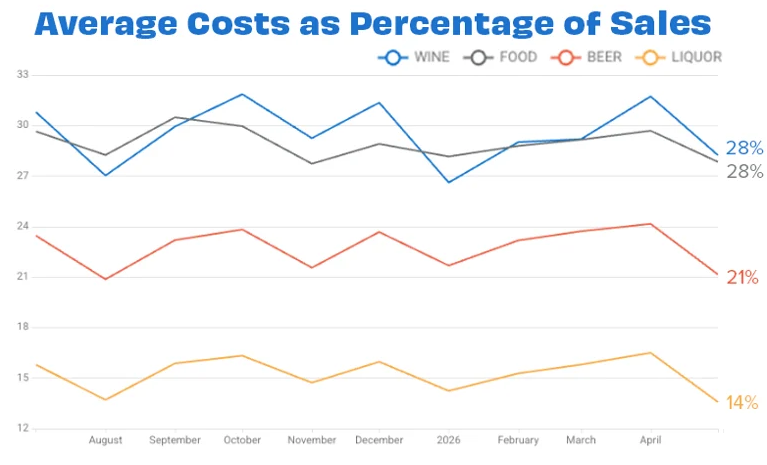
Between January 2026 and May, food costs have risen by 1.44%, accounting for an average of 28% of total sales.
- Wine costs have an average monthly cost of 28% of sales.
- Beer costs have an average monthly cost of 21% of sales.
- Liquor costs have an average monthly cost of 14% of sales.
As we mentioned earlier, costs are always changing (and often rising). What are ways restaurant operators can cut back on costs without cutting back on quality or guest experience.
How can I keep my COGS down (even with inflation)?
1. Focus on inventory management
Automated inventory tools with automatic price updates, food usage reports and vendor item updates can make your job much easier. These tools can help you monitor stock levels, avoid over-ordering and ensure you’re not caught off guard by sudden price hikes. Additionally, food usage reports can identify high-cost or low-margin items, allowing you to adjust your purchasing strategy. By staying proactive, you can reduce costs and prevent unnecessary expenses.
2. Sales forecasting
Using sales forecasting tools, you can better anticipate customer needs and seasonal trends. This ensures you’re stocking the right products in the right quantities, minimizing over and under-ordering situations. With better forecasting, you can negotiate more favorable pricing terms with suppliers for high-demand items while avoiding waste from unsold inventory.
.png?width=637&height=424&name=Image%20Compression%20%F0%9F%8E%A1%20(7).png)
3. Cut back on waste
Waste management tools like theoretical vs actual usage reporting and waste logs can help you keep a closer eye on inventory discrepancies, reduce unnecessary expenses and improve overall cost efficiency.While we may not be able to control the cost of tomatoes or the unexpected hiccups that come with running a restaurant, staying informed with current trends is a great proactive step in the right direction. When you stay informed, you can plan effectively. And with the right tools, you’ll have a plateful of tips and tricks to keep your COGS in line even with rising costs.
