

March 13, 2026
This month we look at: broccoli prices, the pros and cons of third-party vs in-house delivery, retention and the new kitchen culture, inflation and national restaurant sales trends from February.
March is here, which means spring is on its way! And it's also Women's History Month, so check out our Gift Guide here!
We hope it was smooth sailing through Valentine's Day last month, and judging by the sales metrics, it was a big weekend for our industry (more on that below!).
This month, we've also got some insights into how the conflict in Iran is already impacting inflation, the pros and cons of in-house vs. third-party delivery and, given the big Noma news over the last week, a few statistics on the financial impact that a positive kitchen culture can make on restaurants.
Know someone who would like to join our 109,698 subscribers? Forward to a friend or send them this link.
Wishing you all a profitable (and much, much warmer) March!
- Rachel & the MarginEdge team
P.S. If you took our very, very accurate Restaurant Personality Type quiz, your March mantras are here!
![[Sign up for our newsletter] Get sales data and restaurant insights straight to your inbox each month](https://no-cache.hubspot.com/cta/default/6423873/2b19fcb4-92a7-41e5-8a2f-75a74dad0c24.png)

MONTHLY SALES METRICS & UPDATE
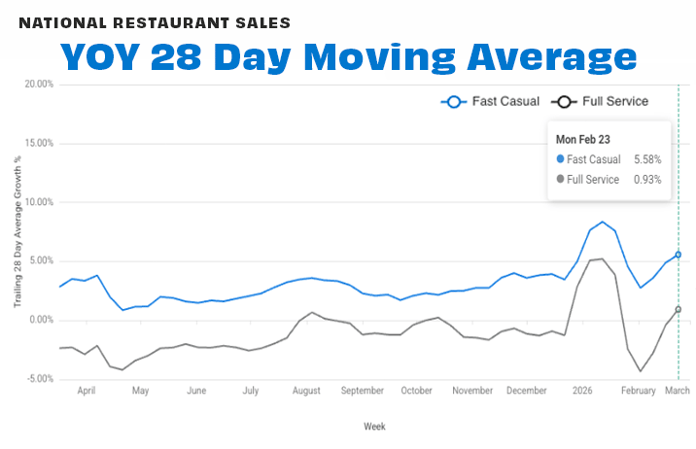
The trailing 4-week (28-day) average of year-over-year (YOY) sales for Fast Casual came in at +5.58% and Full Service at +0.93% at the end of February compared to 2025 sales.
Food costs averaged 29% of sales last month, representing a +1% increase from the average in January.


ITEM TO WATCH
Broccoli
The king of cruciferous vegetables has been carrying a heavier price per crown as of late. Median broccoli prices for MarginEdge clients have gone up +32% over the last six months at $2.26 per pound, and up +48% over the last 12 months. The biggest culprit in the rise has been crowns and organic broccoli products; however, there has been more variability in bunched products, which may have lower prices.
Broccoli prices are rising mainly because supply from major farms is tighter due to adverse weather, while production, fertilizer, and transportation costs are increasing and will likely continue given the ongoing Iran conflict impacting oil transportation and trade.

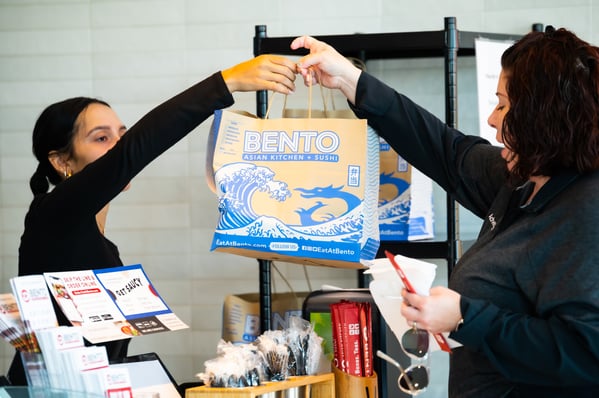
Bento | Multiple locations, FL
ASK [me] ANYTHING
Is it better to use third-party delivery apps or manage delivery in-house?
Third-party delivery platforms have become more and more popular, with 42% of operators using them in their business, according to a 2025 NRN study. And it's no wonder, as restaurant dining trends have become more and more digital over the last six years. They're convenient, have wide user bases and can generate meaningful income for many restaurant operations. On the flip side, they also can come with hefty commission fees and less control over your guests' experiences, which can eat into profits quickly. In-house delivery, on the other hand, eliminates those issues but comes with its own set of challenges. So, we've put together a quick overview of the pros and cons of each to help decide which is the better option for your operations:
Third-party delivery apps
Pros:
-
Wider customer reach: With the apps, you get access to a large, pre-existing customer base on platforms like DoorDash, Uber Eats, and Grubhub. This translates to increased visibility through app promotions and featured listings for your restaurant, aka new customers finding you in the wild.
-
Convenience: There's no need to hire, train, or manage delivery drivers. The platforms handle logistics, including order tracking and customer support.
-
Quick setup: It's fairly easy to onboard and start receiving orders without significant upfront investment.
-
Marketing support: These platforms often promote restaurants through ads, discounts and search algorithms, which increases your exposure to new customers who may not have discovered your restaurant otherwise.
- Scalability: They give you the ability to handle high-order volumes during peak times without additional infrastructure, or the ability to turn off online ordering if in-house volumes are too high.
Cons:
-
High commission fees: Platforms charge 15-30% per order, significantly cutting into profit margins, plus there are additional fees for marketing or premium placement.
-
Loss of control: You have limited control over the customer experience, including delivery times and food handling, and negative reviews on the platform can impact your reputation.
-
Customer data ownership: Delivery platforms retain customer data, making it harder to build direct relationships or loyalty programs.
-
Brand dilution: Your restaurant is one of many on the platform, making it harder to stand out, and customers may associate their experience with the platform rather than your brand.
-
Dependence on third parties: Over-reliance on third-party platforms can be risky if fees increase, terms change or systems go down.
Creating your own delivery system:
Pros:
-
Higher profit margins: In-house means no commission fees, allowing you to keep more of your revenue. It also gives you full control over pricing and delivery fees.
-
Brand control: You retain the ability to provide a consistent, branded experience from order to delivery and maintain direct communication with customers, meaning you can handle disputes or complaints yourself.
-
Customer data ownership: In-house means you collect valuable customer data for marketing, loyalty programs and personalized offers, which help build stronger relationships with repeat customers.
-
Flexibility: You're able to tailor your delivery system to your restaurant’s specific needs and operations. You can also offer unique perks like subscription meal plans or exclusive delivery zones.
- Long-term savings: While the initial investment may be high, owning your system can save money in the long run.
Cons:
-
High initial investment: There are higher costs for hiring drivers, purchasing vehicles and setting up an online ordering system. On top of that, you should also expect additional expenses for insurance, training and technology.
-
Operational complexity: Managing logistics, including driver schedules, delivery routes and customer support, can add a lot of complexity to your operations if you're running a lean ship. This can also lead to an increased risk of errors or delays without the infrastructure of a third-party platform.
-
Limited reach: Your system may not have the same customer base or visibility as third-party apps, which means marketing and customer acquisition become your responsibility.
-
Scalability challenges: Handling high-order volumes during peak times can strain resources and expanding delivery zones may require significant investment in new drivers or packaging materials that will maintain food quality for longer delivery distances.
- Technology requirements: You'll need a robust online ordering platform with features like real-time tracking and payment processing, plus expect ongoing maintenance and updates to keep the system running smoothly.
Which option is best?
Third-Party delivery apps are ideal for restaurants looking for quick setup, wider reach and minimal operational burden. They’re especially useful for smaller restaurants or those just starting with delivery. Creating your own delivery system is better for established restaurants with a loyal customer base that have the resources to invest in infrastructure and a desire to control the customer experience and maximize profits. Many restaurants also find success with a hybrid approach: using third-party apps to attract new customers while encouraging direct orders through their own system to build loyalty and improve margins.
💬 Ask [me] anything!
Really. Each month we’ll take a look at the questions we get and answer one here. Have a question about our product, accounting, or restaurant operations in general? 💌 Email me or message us on our social media channels.
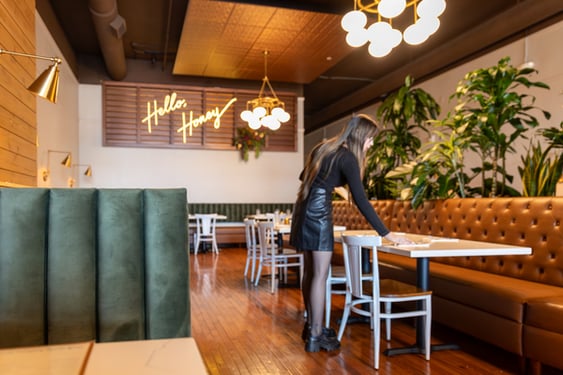
The Hive | Portland, OR
THE ECONOMY
Inflation
The February 2026 Consumer Price Index (CPI) report is in, and indicates the following month-over-month changes in food inflation:
- Overall Food Inflation: Up at 0.4% from January, and is up 3.1% YOY.
- Food At Home: Up 0.4% from January, and is up 2.4% YOY.
- Food Away from Home: Up 0.3% from January, and is up 3.9% YOY.
- Limited Service Meals: Up 0.3% from January, and by 3.2% YOY.
-
Full Service Meals: Up 0.3% from January, and up by 4.6% YOY.
Overall, inflation came in at 2.4%, which was the same as in January. The largest increase came from fuel oil, up 11.1% from January 2025 and 6.2% over the last 12 months. Economists are estimating that prices could increase by as much as 1.0% in March for consumers and that the Fed will not be lowering interest rates at their March meeting.
Tl;dr - Inflation steadied in February, but is expected to increase next month thanks to fuel price impacts from the conflict with Iran.
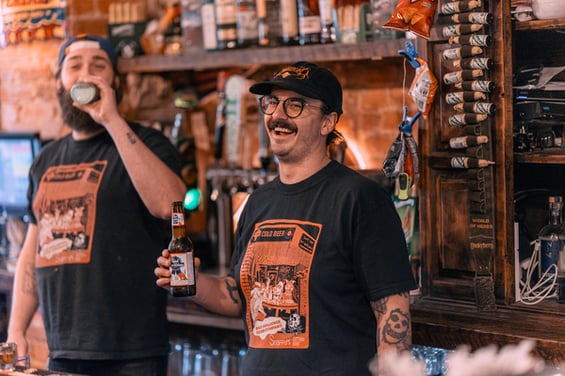
Snappy's Small Bar | Washington, DC
'TIS THE SEASON
Retention and the new kitchen culture
The New York Times published an article last week about strong allegations of violence and employee mistreatment by famed Noma chef René Redzepi. The article made such an impact that it led to the chef's resignation this week. Abusive kitchen cultures are not new or unheard of. Who hasn't seen Gordon Ramsay scream at chefs on Hell's Kitchen, or read through the late great Anthony Bourdain's recounts of the underbelly of the industry in Kitchen Confidential?
Articles like these only highlight that a new kitchen culture is emerging. One with less outwardly-directed rage and more emphasis on positive employee well-being. And, it turns out, it's making a significant impact not just on better work environments, but on business bottom lines as well.
Here are some key statistics and insights on how treating restaurant employees better can increase profitability and retention:
1. The cost of turnover:
The average cost of losing a frontline restaurant employee is about $5,900, which includes recruitment, training, and productivity losses. For many restaurants, this can amount to $150,000 annually in turnover costs. High turnover rates in the restaurant industry, often exceeding 70% annually, significantly impact profitability.
2. Retention and profitability:
Restaurants that reduce turnover see measurable financial benefits. For example, Full Service restaurants with lower back-of-house turnover experience a 5% increase in same-store traffic growth compared to those with high turnover. Plus, retaining employees during their first 90 days can save 12-22% of labor costs, depending on the restaurant type.
Positive workplace experiences, such as clear job expectations, mentorship and career growth opportunities, are directly linked to improved retention rates. And companies that invest in workforce technology, such as AI-driven tools for employee engagement, report better retention and satisfaction.
3. Workplace culture:
A supportive workplace culture that includes open communication, fair compensation and work-life balance fosters employee satisfaction and reduces turnover. Poor workplace culture leads to disengagement, lower morale and higher turnover, which negatively impacts customer service and profitability.
4. Leadership and development:
Developing in-house talent and providing leadership opportunities can significantly improve retention. For example, one restaurant chain reported that 60% of its management talent was grown internally, reducing the need for external hires.
By focusing on employee well-being, fostering a positive culture, and investing in retention strategies, restaurants can not only reduce costs but also enhance customer satisfaction and profitability.
What's [me] into😂 WHAT WE'RE LAUGHING AT
📖 WHAT WE'RE READING
🎧 WHAT WE'RE LISTENING TO
|
