

November 20, 2026
This month we look at: turkey prices, where to look for kitchen waste, how to account for gift cards this holiday season, and inflation and national restaurant sales trends from October.
Happy November and GTA VI launch week to those who celebrate! Yes, it was a choice to send out this email knowing we'd be in direct competition, but with so much good stuff, I think even Jason and Lucia would give this newsletter a read. 👀
Thanksgiving is next Thursday (November 26), Black Friday kicks off gift card season the day after, and Small Business Saturday and Giving Tuesday are right behind it. So to get you in the giving (or gifting) spirit, we've got our 2026 Holiday Gift Guide - check it out here!
It's the busiest stretch of the year, and a lot is changing at the same time. The Farm Bureau's annual survey landed this week, and for the first time since 2022, the classic Thanksgiving dinner got more expensive, led by the turkey itself. Meanwhile, the National Restaurant Association reports that more operators saw higher same-store sales in September than at any point since February, even as customer traffic stayed soft.
So this edition is about tightening up before the rush. We break down the turkey, food waste (especially timely when you're prepping big holiday batches), and our friends at The Fork CPAs walk through how to account for the gift cards you're about to sell.
For anyone looking to up their accounting game, we've got a very exciting live session with Ryan Handle, CEO and Founder of FIXE Accounting, for a look at why connected restaurant technology (not one company trying to do everything) is what actually drives better decisions and fewer headaches on Tuesday, December 1 at 3 PM ET. Save your spot!
Know someone who would like to join our 119,253 subscribers? Forward to a friend or send them this link.
We're thankful for every operator who reads this, and we hope you have a safe and busy holiday week. We know it means missing your own family gatherings to make moments special for everyone else so just know we see you and we appreciate you so much!!
Happy Thanksgiving and remember: the ticket printer knows when it’s the busiest night of the year, and it will pick that moment to run out of paper. So stock up on extra rolls now!
- Rachel & the MarginEdge team


MONTHLY SALES METRICS & UPDATE
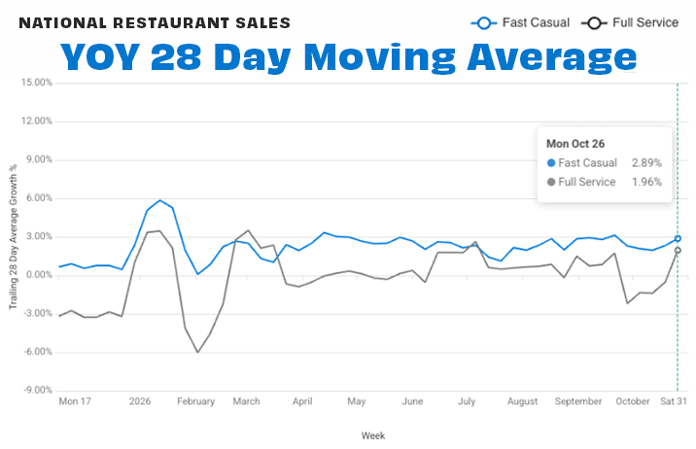
The trailing 4-week (28-day) average of year-over-year (YOY) sales for Fast Casual came in at +2.89% and Full Service at +1.96% at the end of October compared to 2025 sales.
Food costs averaged 29% of sales, the same as September.

ITEM TO WATCH
Let's talk turkey
Nothing is more of a holiday staple than the bird itself, and it's the biggest story on this year's Thanksgiving table. The American Farm Bureau Federation's annual survey, released this week, found that the classic dinner for 10 now averages $58.63, up 6% from last year, the first overall increase since the record high in 2022. The expanded menu with ham, russet potatoes and green beans comes in at $81.72.
Turkey was the biggest driver. According to the Farm Bureau's economists, turkey flocks are still rebuilding after years of disease pressure, which has kept supplies tight. It wasn't all bad news, though: about a third of the items in the survey got cheaper, and PwC's pre-holiday forecast flagged butter down about 10% and cream down about 6%, which helps if holiday baking and desserts are on your menu.
One caution for operators: grocery stores love to run turkey deals, with Farm Bureau shoppers reporting prices as low as 69 cents a pound. Those promotions are retail and may not carry over to what you pay your distributor, so check your own invoices before you price a holiday special.
Prices have come down substantially in the last month, an annual trend around turkey-time. The current median price per pound for whole turkeys across MarginEdge customers is $2.63. This time last year, it was $1.82, a roughly 45% increase.
Also on the move in October (month-over-month change in median price, per MarginEdge's Price Index):
- Up: Grape tomatoes +71% ($3.77/lb), shredded lettuce +51% ($2.15/lb), iceberg +37% ($2.82/lb), romaine +34% ($2.50/lb), green onions +21% ($6.00/lb)
- Down: Fresh blackberries -14% ($4.50/pint), strawberries -11% ($3.99/lb), flank steak -10% ($8.79/lb), condensed milk -7% ($2.47/14 oz), bacon -6% ($4.69/lb), asparagus -5% ($5.82/lb)
If your holiday menu leans on salads and tomatoes, those costs are climbing, while a few dessert and brunch ingredients are easing.
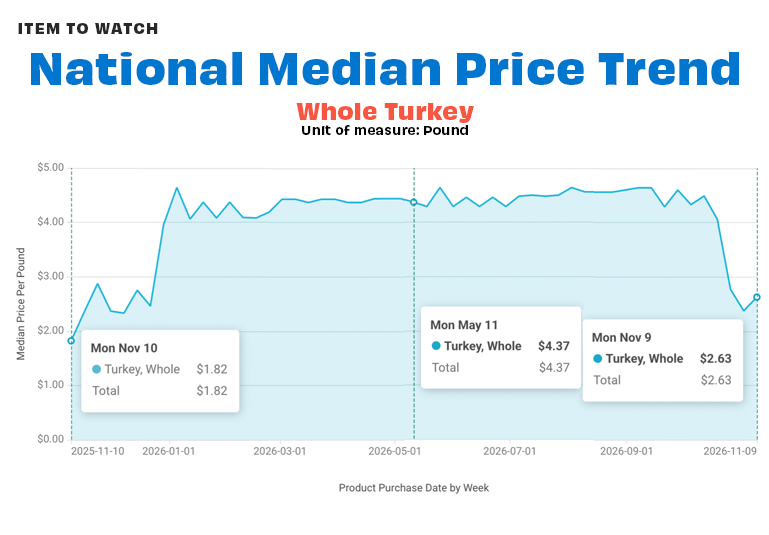
The MarginEdge Price Checker (labs.marginedge.com/price-checker) is a free tool that shows how restaurant ingredient costs are trending nationally and by region, using aggregated, anonymized data pulled from 12,000+ restaurants and 35,000+ vendors on MarginEdge's platform. Anyone can search a specific item to see its current median price and recent trend, or browse the Price Index to see the biggest movers across the industry that month.
Tonic at Quigley's | Washington, D.C.
ASK [me] ANYTHING
How can I stay on top of waste this holiday season?
With holiday menus, big-batch prep and turkey costing about 10% more this year, a pound in the trash costs more than it did last year. Here's the quick version of how to stop the leak:
| Where the waste could happen | What to do about it |
| Over-ordering and poor rotation. Produce spoils in the walk-in before you use it. | Use FIFO (first in, first out): date every delivery and move older stock to the front. Order based on your sales forecast, not gut feel. |
| Over-prepping. Prep the same volume every day, no matter the traffic. | Prep to forecasted demand, shift by shift. |
| Inconsistent portions. One cook plates six ounces, another eight, and the recipe says seven. | Standardize recipes with defined portions so plate costs stay predictable. |
| Plate waste. Nearly 70% of foodservice surplus, according to ReFED data. | Track what comes back and why, then adjust portions or menu items. |
| Waste you can't see. It goes in the trash and never shows up in your numbers. | Keep a waste log with the item, quantity, reason and date, and tie it to your POS and food cost data. |
Then make it a habit: share the numbers at pre-shift, celebrate when they drop, and donate surplus food that's still safe to eat.
💬 Ask [me] anything!
Really. Each month we’ll take a look at the questions we get and answer one here. Have a question about our product, accounting, or restaurant operations in general? 💌 Email me or message us on our social media channels.
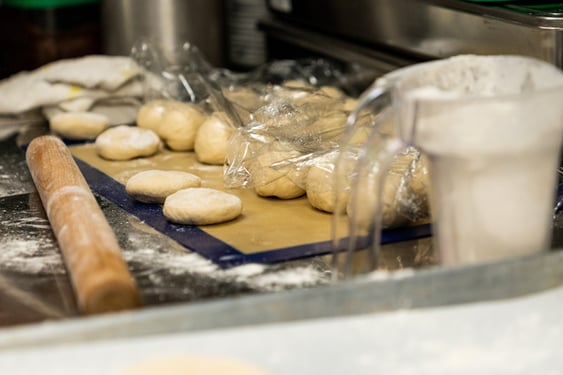
Imperfecto | Washington, D.C.
THE ECONOMY
Inflation
The October 2026 Consumer Price Index (CPI) report is in, and indicates the following month-over-month changes in food inflation:
- Overall Food Inflation: Up 0.5% from September.
- Food At Home: Up 0.4% from September.
- Food Away from Home: Up 0.5% from September.
- Limited Service Meals: Up 0.4% from September.
- Full Service Meals: Up 0.7% from September.
You won't see year-over-year numbers this month. The BLS didn't collect October 2025 data because of last year's government funding lapse, so it can't publish 12-month changes for October. For reference, the September readings were +3.5% for restaurant prices and +1.8% for groceries.
Overall CPI rose 0.4% in October after 0.6% in September, and food away from home posted its biggest monthly gain since at least April. The Fed held rates at 3.75%-4.00% on October 28, with two officials voting for another hike.
Tl;dr - Food prices jumped 0.5% in October, and menu prices (Full Service in particular) rose faster than anything else on the list.
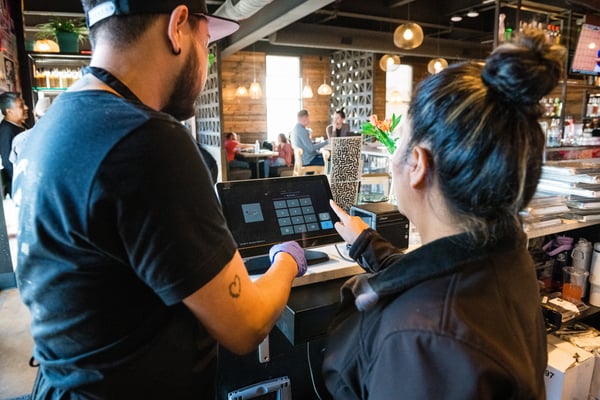
Luna's Tacos & Tequila | Multiple locations, CO
'TIS THE SEASON
Gift card season: how to account for the cards you're about to sell
Black Friday weekend is the biggest stretch of the year for restaurant gift cards. According to Paytronix, last year's Thanksgiving weekend brought an 8% lift in gift card purchases, with more cards sold earlier in the weekend, and big chains like The Cheesecake Factory are already running bonus card offers this season.
Cash comes in before a guest ever sits down, but only if your books treat it correctly. Our friends at The Fork CPAs, an accounting and controllership firm built for restaurants and bars, put together a clear walkthrough in Accounting for Gift Cards in Restaurants. Here's the short version:
- A sold card is a liability, not revenue. You record the full amount as money you owe in future food and service, and it isn't taxed at the time of sale. That holds for discounted cards (a $50 card sold for $45) and cards you give away too, where the discount shows up on your P&L.
- Revenue is recognized at redemption. When a guest uses the card, the liability goes down and the sale is recorded.
- Plan for unredeemed balances. Under GAAP (typically if you're audited), breakage is recognized in proportion to redemptions using your breakage rate. If you aren't audited, you can use a periodic "true-up" based on a written policy, like balances older than 18 months. Either way, check your state's rules: federal law generally bars gift cards from expiring in less than five years, some states bar expiration entirely, and unclaimed property laws may require you to send unredeemed balances to the state.
- Reconcile your POS to your books. Comparing your POS gift card liability report to your accounting records helps you catch fraud and keeps your financials accurate. Since cards sold this month will still be on your books at year-end, now's a good time to confirm they tie out.
- Multi-unit? Track by location. Cards are often sold at one location and redeemed at another, which can create negative balances at a new location, and separate legal entities need intercompany receivables and payables.
- Taxes depend on your method. Cash-basis businesses are taxed when cards are sold. Accrual-basis businesses can elect to defer, but anything not redeemed within a year gets taxed the following year, so you'll want to track balances by the year they were sold.
The Fork CPAs also point out that these entries can be automated into your accounting system with tools like MarginEdge. If you'd like help getting your gift card accounting and reconciliation working properly, contact The Fork CPAs, and grab their free chart of accounts template while you're there.
P.S. You can also hear their founder, Raffi Yousefian, on our podcast, Science of Service!
What's [me] into😂 WHAT WE'RE LAUGHING AT
📖 WHAT WE'RE READING
🎧 WHAT WE'RE LISTENING TO
|
