

June 12, 2026
This month we look at: onion prices, a menu engineering refresh, reservation management best practices, inflation and national restaurant sales trends from May.
Happy Pride/World Cup/Stanley Cup/NBA Finals/Father's Day/Love Island-returns month to all who celebrate! Really, this month has something for everyone. And more things to celebrate means more people going out to restaurants (although the market for Love Island watch parties is severely underserved in my opinion).
That's why this month's edition is focused on best practices for reservation management (because we are manifesting a jam-packed June for you all) and a menu engineering refresher so you can be sure those Carolina/Vegas/San Antonio/New York fans are all in on your most profitable dishes.
Be sure to also check out our Pride Month Gift Guide featuring gifts and treats from LGBTQ+ owned and operated restaurant businesses to show your support and treat yo'self (you know you deserve it).
Lastly, we are hosting a free masterclass next Tuesday, June 16th at 11 AM ET on keeping culinary and finance teams in sync. The webinar will be led by Michael Sanfilippo, former Brand Chef and Head of Innovation at CAVA, and Gina Cavendish, former CFO at maman, as they discuss how to create a frictionless relationship between culinary and finance teams for growing multi-unit restaurant groups. Sign up for your spot here!
Wishing you all a safe but very busy June and we'll see you in July!
- Rachel & the MarginEdge team
P.S. If you took our very, very accurate Restaurant Personality Type quiz, your June mantras are here!
![[Sign up for our newsletter] Get sales data and restaurant insights straight to your inbox each month](https://no-cache.hubspot.com/cta/default/6423873/2b19fcb4-92a7-41e5-8a2f-75a74dad0c24.png)

MONTHLY SALES METRICS & UPDATE
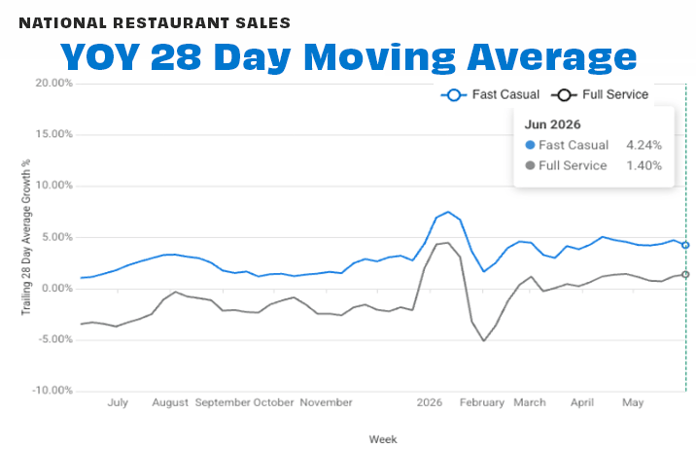
The trailing 4-week (28-day) average of year-over-year (YOY) sales for Fast Casual came in at +4.24% and Full Service at +1.40% at the end of May compared to 2025 sales.
Food costs averaged 28% of sales last month, which was a small drop from April.

ITEM TO WATCH
Onions
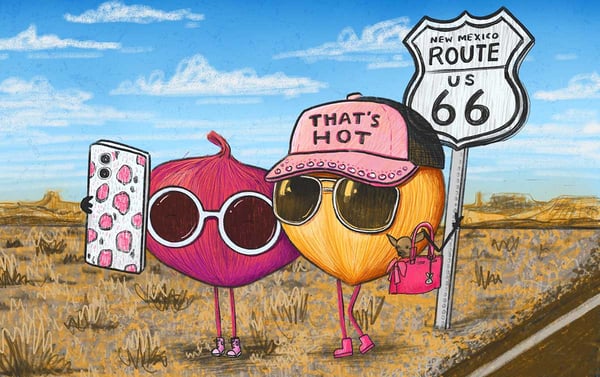
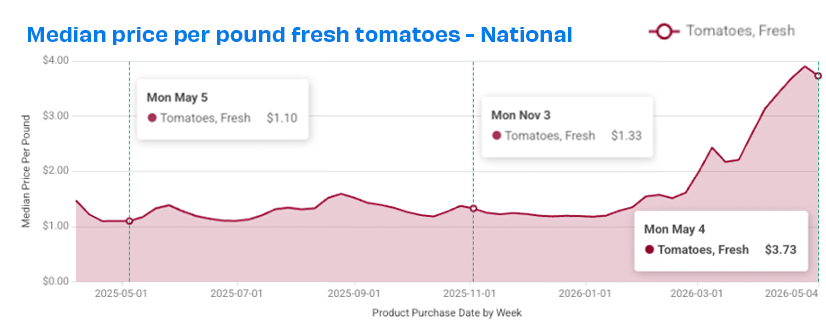
Unfortunately, the usual tear-prevention tricks (goggles, running water, or biting down on a toothpick) may not help much this month, since onion prices are what’s really making us cry. And since red and yellow onions were the seventh and ninth most purchased products across our 12,000+ restaurant clients last month, we know it's making an impact when we see a price increase this steep.
The current red onion median price per pound across MarginEdge clients is $0.91, which is up +25% from six months ago, and +12% from 12 months ago.
For yellow onions, the current median price per pound across MarginEdge clients is $0.61, which is up +42% from six months ago, and +36% from 12 months ago.
The increase is thanks to a combo of seasonal changes for growing regions (switching from California to New Mexico) and increased freight costs from gas prices jumping up in the last few months. California gas, and therefore freight costs, are higher on average, so we may see some relief as the production regions change. But prices may likely remain high while gas prices stay up.

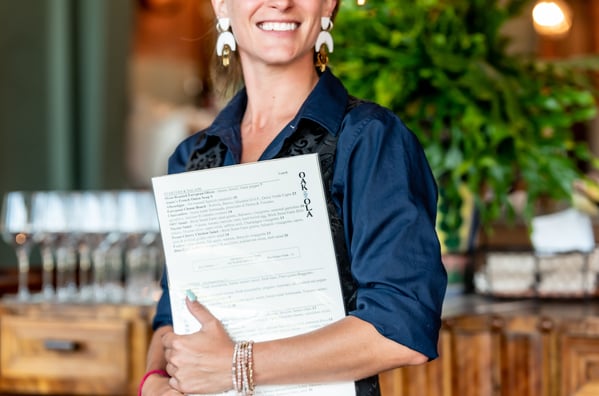
Oak & Ola | Tampa, FL
ASK [me] ANYTHING
What's the tl;dr on menu engineering?
Let's talk menu engineering. It sounds fancy, but it's really just a smart way of looking at your menu through two simple lenses: how much money each dish makes you and how often guests order it. Put those two together, and you stop guessing about what to keep, fix, or cut and start making decisions backed by real numbers.
That matters because your menu is one of the biggest levers you've got for profitability, and small tweaks can add up fast. So here's the deal: every dish lands in one of four buckets. Sort them out, and you'll know exactly where to push, tweak or cut. Here's our cheat sheet:
🌟 Stars (high profit, high popularity): Your crowd-pleasers that also pad the bottom line. Don't touch the recipe—just shine a brighter spotlight. Feature them on the menu, post them on social, or add a lunch-sized version.
🤔 Puzzles (high profit, low popularity): Great margins, but nobody's ordering them. Figure out why first—weak description, awkward placement, off-putting name—then promote harder. A quick server sales contest can move the needle fast.
🐴 Plow Horses (low profit, high popularity): Customers love them, but they barely earn their keep. Trim food costs without changing what guests love—tighten prep, cut waste, adjust portions, or nudge the price.
🐶 Dogs (low profit, low popularity): The ones quietly costing you money. You've got three moves: rework the recipe, run it as a limited-time special, or 86 it for good.
✨ Bonus: How often should you be looking at these numbers?
You should aim to run a menu engineering check every quarter, or anytime you swap out items or see food costs creep up. That keeps you ahead of the curve without turning it into a second job. Not sure where to begin? Start with your Plow Horses and Dogs because they're where the money's leaking fastest, so a few smart fixes there give you the biggest, quickest payoff. Once those are handled, circle back to your Puzzles and Stars to squeeze out even more.
💬 Ask [me] anything!
Really. Each month we’ll take a look at the questions we get and answer one here. Have a question about our product, accounting, or restaurant operations in general? 💌 Email me or message us on our social media channels.
.jpg?width=563&height=375&name=Image%20Compression%20%F0%9F%8E%A1%20(1).jpg)
The Migrant Kitchen | New York City, NY
THE ECONOMY
Inflation
The May 2026 Consumer Price Index (CPI) report is in, and indicates the following month-over-month changes in food inflation:
- Overall Food Inflation: Up 0.5% from April, and is up 3.1% YOY.
- Food At Home: Up 0.1% from April, and is up 2.7% YOY.
- Food Away from Home: Up 0.3% from April, and is up 3.5% YOY.
- Limited Service Meals: Up 0.3% from April, and by 3.3% YOY.
-
Full Service Meals: Up 0.3% from April, and up by 3.8% YOY.
Overall, inflation came in at 4.2%, which was up again from last month. Energy was once again the key contributor, with gasoline and fuel oil both increasing more last month than from March to April. Analysts are estimating that the Fed won't be looking at any rate cuts into 2027.
Tl;dr - Food at home prices came up but not as much as last month; restaurant prices maintained a steady increase.
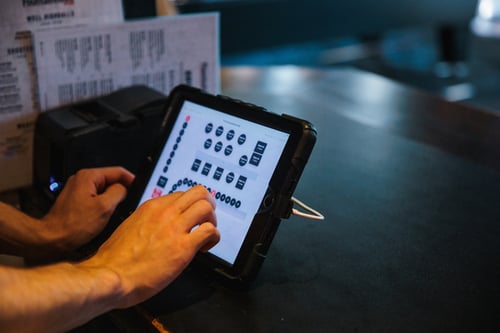
Fountainhead Pub | Vancouver, BC
'TIS THE SEASON
Reservation management
When the rush hits, your reservation system is either your best friend or your biggest headache, and most experts generally recommend treating reservation management as both an operations tool and a revenue tool. So it's safe to say a little planning now keeps tables turning, guests happy and your hosts from seeking refuge in the walk-in later. Here are some helpful tips on how to keep the book humming even when the summer rush hits:
Lock in the fundamentals
- Set clear policies upfront. Define hold times (most restaurants use 15 minutes), cancellation windows (some use 24 - 48 h windows depending on the concept type), no-show rules, deposit requirements and any large-party terms before the guest completes booking.
- Pace the book. Spread arrival times and manage table mix carefully so the kitchen, hosts and servers can keep up without bottlenecks. You can and should also pad each reservation a little so one slow table doesn't topple the whole night.
- Actively reduce no-shows. Best practices include automated reminders, easy cancellation paths and using credit card holds or deposits for high-demand times or larger parties.
- Balance reservations with walk-ins. Experts emphasize not overcommitting the book, so you preserve flexibility, protect service and maintain table-turn efficiency.
- Coach your staff on warm, consistent communication. Policies matter, but how hosts explain delays, late arrivals, patio limitations or table time expectations matters just as much.
Kicking it up a notch
- Use a digital reservation system. Modern systems help reduce double-bookings, automate confirmations and reminders, capture guest preferences and improve table flow.
- Collect useful guest data. Reservation systems work best when they capture occasion notes, dietary restrictions, seating preferences and visit history to support better hospitality and repeat business.
- Match your no-show policy to your concept. Prepaid bookings may make sense for high-demand or tasting-menu experiences, while credit card holds or reminder-based systems may be better for more casual concepts.
- Review performance regularly. Operators should watch no-show rates, late arrivals, average turn times, peak-time bottlenecks and booking-source mix to keep improving the system over time.
Handle patio and outdoor seating like a pro
- Have a weather plan. Know your move if the skies open up and plan ahead with indoor backups, tents or a clearly stated (and repeated) rain policy.
- Set expectations early. Be upfront that outdoor seating is a preference, not a guarantee.
When a table runs long
- Read the signs early. Train staff to spot the lingering table before it backs up the whole rotation.
- Communicate proactively. A friendly check-in (with the dessert menu in hand) nudges things along without rushing anyone.
- Protect the rest of the book. Shift waiting parties to open tables or buy time at the bar so no one feels forgotten.
The takeaway: a well-managed book isn't about being rigid; it's about staying one step ahead so every guest feels taken care of, even on your busiest summer nights.
What's [me] into😂 WHAT WE'RE LAUGHING AT
📖 WHAT WE'RE READING
🎧 WHAT WE'RE LISTENING TO
|
