

September 18, 2026
This month we look at: egg prices, the impact of GLP-1s on diners, how to turn football game days into a repeatable profit engine, inflation and national restaurant sales trends from August.
It's nearly fall, y'all! Meaning it's almost time to start regularly using the P-word (pumpkin, duh), and even more importantly, to start complaining about how everything is pumpkin-flavored until the first week of December (when we get a new p-word to overuse: peppermint).
And it wouldn't be the start of fall without one of my favorite F-words: football. So scroll on down to our Tis' the Season section to read more about how you can turn game-days into regular profit drivers for your restaurant over the next few months.
This month's ask [me] anything, thanks to one of our awesome readers, is all about GLP-1s and their impact on restaurant sales and consumer trends. If you've got a burning industry-related question, shoot me an email and we'll cover it in an upcoming edition! (Yes, even in the age of AI, I promise I am a real person and I do respond!)
Speaking of AI, we've got another AI live session next week on September 23 at 12:00 PM ET with the one and only Chip Klose, discussing step-by-step how to build AI tools that can act as your in-house assistant. You can register for your spot here!
Know someone who would like to join our 116,211 subscribers? Forward to a friend or send them this link.
Have a happy and safe September, and we'll see you in October!
- Rachel & the MarginEdge team
P.S. If you took our very, very accurate Restaurant Personality Type quiz, your September mantras are here!
![[Sign up for our newsletter] Get sales data and restaurant insights straight to your inbox each month](https://no-cache.hubspot.com/cta/default/6423873/2b19fcb4-92a7-41e5-8a2f-75a74dad0c24.png)

MONTHLY SALES METRICS & UPDATE
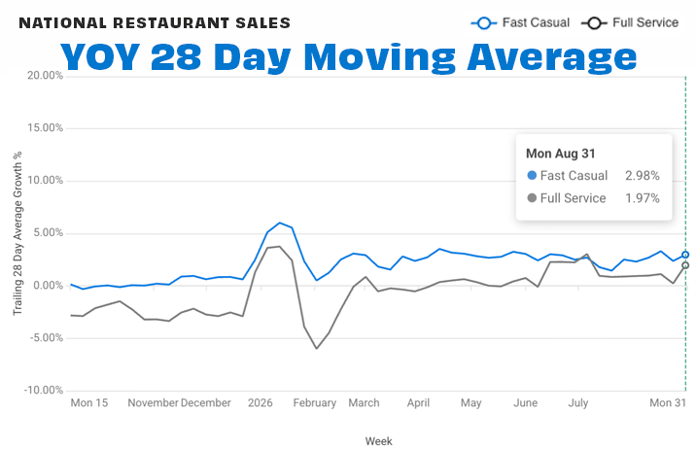
The trailing 4-week (28-day) average of year-over-year (YOY) sales for Fast Casual came in at +2.98% and Full Service at +1.97% at the end of August compared to 2025 sales.
Food costs averaged 28% of sales last month, a slight decrease from July.

ITEM TO WATCH
Eggs
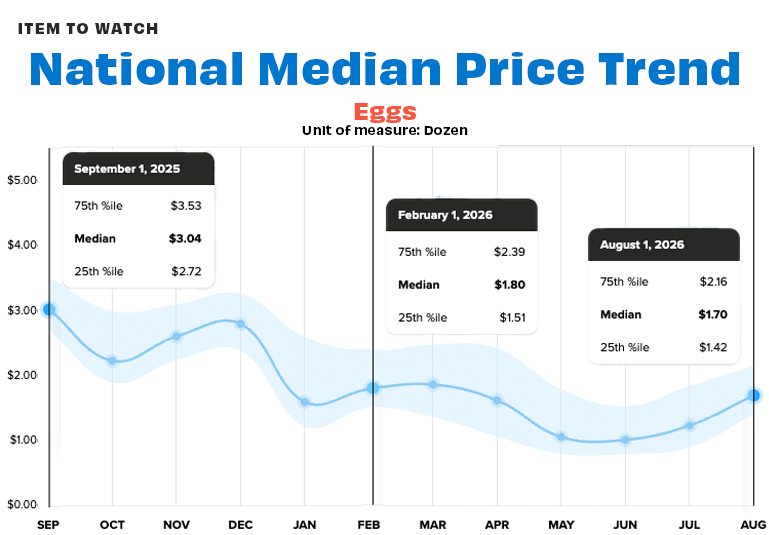
After months of relief, eggs are back on the radar. According to MarginEdge's Price Checker, here's where things stand right now:
- Eggs: current median price of $1.70/dozen, up 37% from its median price last month.
The culprit is a familiar one: bird flu. A wave of HPAI detections hit poultry flocks across 12 states in June, and USDA data shows retail price increases typically show up 6–8 weeks after a depopulation event, which lines up almost exactly with August's bump. Producers have already culled roughly 12.4 million laying hens in 2026, more than double the total from the back half of 2025.
It's a fraction of last year's chaos (remember $6.23/dozen?), but the pattern is one operators have seen before: HPAI flares, supply tightens, and egg-heavy menu items feel it first. Worth keeping an eye on menu costing for brunch, baking, and breakfast programs over the next month or two. If outbreaks keep spreading, this could be more than a one-month blip.
And in case you missed it: In June, the DOJ and 17 states settled price-fixing claims against three major egg producers (Cal-Maine, Versova, and Hickman's) over allegations they coordinated bids to inflate the industry's benchmark pricing index between 2022 and 2025. The companies will pay $3.3M combined and donate 53 million eggs to food banks, without admitting wrongdoing.
The MarginEdge Price Checker (labs.marginedge.com/price-checker) is a free tool that shows how restaurant ingredient costs are trending nationally and by region, using aggregated, anonymized data pulled from 12,000+ restaurants and 35,000+ vendors on MarginEdge's platform. Anyone can search a specific item to see its current median price and recent trend, or browse the Price Index to see the biggest movers across the industry that month.
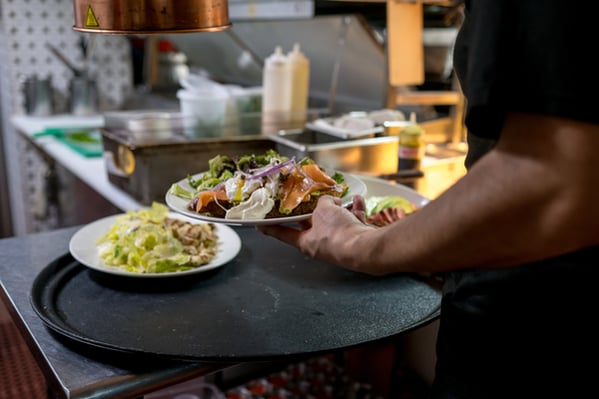
The Consulate | New York City, NY
ASK [me] ANYTHING
How are GLP-1s impacting the way guests order?
We've all heard about Ozempic and seen the Serena Williams ads on TV, and it's no wonder why they're seemingly everywhere. About one in eight U.S. adults are now on a GLP-1 medication like Ozempic or Zepbound, more than double the rate from early 2024, and roughly 23% of households now have at least one user.
GLP-1 medications mimic a hormone your body naturally makes that helps regulate blood sugar, slow how quickly food leaves the stomach and signal fullness to the brain. In practice, that usually means people feel satisfied sooner, stay full longer and often eat smaller portions or snack less. And the impact on restaurants is already measurable, not just theoretical:
-
Cornell research found restaurant spending drops an average of 8% within the first six months of starting a GLP-1.
-
KPMG pegs the calorie cut at 21% per user.
-
JPMorgan estimates the drugs could wipe out $30 to $55 billion in annual food and beverage sales by 2030.
But before you start bracing for empty tables, let's take a closer look. GLP-1 users still love eating out: 87% say they enjoy going to restaurants and 71% call it essential to their lifestyle. The appetite for the experience isn't shrinking. The appetite at the table is. So it's our job as an industry to be able to tell the difference and make guest-focused changes to meet their changing behaviors.
Where it's hitting hardest varies by daypart and concept. Here's what the data shows:
- Breakfast: Traffic has softened, especially for sugary coffee drinks and pastries among higher-income users who make up a large share of current patients.
- Lunch: Lunch has held up better so far, and sharing-occasion concepts like group pizza orders haven't felt the same pinch.
- Dinner: Data shows dinner traffic down 6% among regular users, with fast-food dinner taking the biggest hit.
- Snacking: Way down across the board, with 70% of users reporting snacking less.
- Overall visit frequency: Roughly half of GLP-1 users say they've cut back on dining out (one study put that number at 60%), yet one in four say they're actually going more often.
The lesson for operators: know exactly which dayparts and menu items carry your margin, because the pullback isn't spread evenly and neither is your exposure.
How are larger chain brands meeting this challenge? Chipotle rolled out grab-and-go protein cups, Starbucks leaned into protein cold foam and Shake Shack, Subway and Olive Garden have all built higher-protein, smaller-portion options over the past year. The math behind the bet is simple:
- 76% of GLP-1 users say they'd pay a premium for menu items that fit how they eat now.
💬 Ask [me] anything!
Really. Each month we’ll take a look at the questions we get and answer one here. Have a question about our product, accounting, or restaurant operations in general? 💌 Email me or message us on our social media channels.
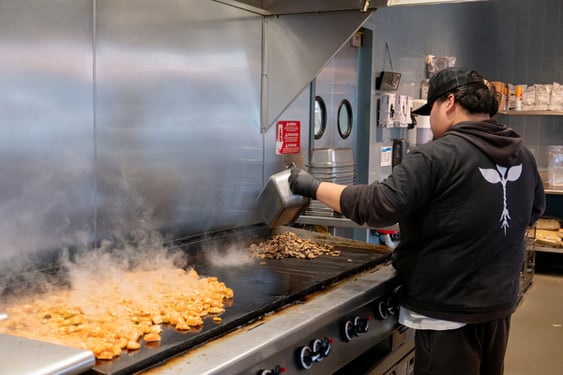
Roots Natural Kitchen | Multiple locations
THE ECONOMY
Inflation
The August 2026 Consumer Price Index (CPI) report is in, and indicates the following month-over-month changes in food inflation:
- Overall Food Inflation: Up 0.1% from July, and up 2.7% YOY.
- Food At Home: Up 0.1% from July, and up 2.7% YOY.
- Food Away from Home: Up 0.3% from July, and up 3.4% YOY.
- Limited Service Meals: No change from July, and up 3.2% YOY.
- Full Service Meals: Up 0.4% from July, and up 3.5% YOY.
Food inflation eased slightly this month, but there's a bigger story to keep on your radar. The Federal Reserve raised its benchmark interest rate by 25 basis points to a range of 3.75%-4% on Wednesday, marking the first rate hike since 2023. The move signals that the Fed now views inflation as a bigger threat than slowing growth, with another potential hike before year's end.
For restaurant operators, higher rates mean higher borrowing costs on equipment, renovations and new locations. It can also cool guest spending, putting pressure on check averages. Meanwhile, food inflation is still running at 2.7%-3.4% depending on the category, so your COGS aren't off the hook yet.
Tl;dr - Food inflation didn't creep up too much, but if you've got financing-dependent plans in the pipeline, run your numbers carefully before you commit to anything.
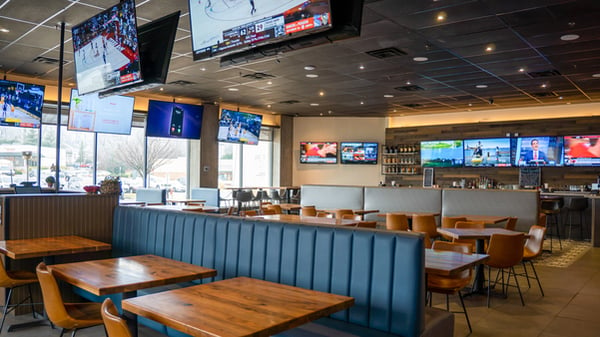
Buffalo Wing Factory | Multiple locations, VA
'TIS THE SEASON
Turning game-day traffic into a repeatable engine
Football season kicked back off this month, with the 2026 NFL season running September 9 through Super Bowl LXI in February, plus a full slate of college games every Saturday. That's not one "watch party" weekend; it's roughly 20 high-volume Sundays in a row, plus Saturdays if you're anywhere near a college town. Treat it that way and it becomes one of the most predictable revenue stretches on your calendar.
The data backs up just how big a swing this is:
- Wings jump 25% in average order volume on football Sundays compared to Sundays out of season.
- Hard seltzer sees a 47% increase in order volume during the season, the single biggest mover of any beverage category.
- Pizza, nachos, burritos and chicken tenders all see steady 5-6% bumps in average items sold on Sundays in season.
- Seafood, fajitas and enchiladas actually see a dip on football Sundays. Guests want familiar, shareable, hands-free food, not the full regular menu.
A few ways to actually capitalize on the season instead of just reacting to it week to week:
- Build a short, dedicated game-day menu. Six to ten items max, built from prep you're already doing, all of which hold well in a bag or on a table for 15+ minutes.
- Set up standing pre-order windows early. The same households tend to order nearly every Sunday for months. A pre-order system you launch in Week 1 or 2 smooths out the kickoff crush and makes every following week easier to staff and prep for, instead of starting from scratch each Sunday.
- Extend hours around early kickoffs. Early games mean early crowds. A game-day brunch menu or earlier opening hours can capture traffic you'd otherwise miss entirely.
- Capture contact info while the traffic is already there. Whatever you gather in Week 1 (loyalty sign-ups, online ordering accounts, email opt-ins) pays off for the rest of the season since it's largely the same guests coming back week after week.
The takeaway: football season isn't a single promotional push; it's a five-month-long, highly repeatable traffic pattern. The operators who treat it like infrastructure (systems, pre-orders, a tight menu) tend to get a lot more out of it than the ones re-deciding their wing special every Sunday morning.
What's [me] into😂 WHAT WE'RE LAUGHING AT
📖 WHAT WE'RE READING
🎧 WHAT WE'RE LISTENING TO
|
