

October 16, 2026
This month we look at: Idaho potato prices, why daily prime cost is the number worth checking every morning, what Uber's $2.3 billion ezCater deal could mean for your holiday catering, and inflation and national restaurant sales trends from September.
Sweater weather and spooky season are officially here, Halloween lands on a Saturday this year (hello, costume-contest brunch), and the holiday rush is a lot closer than it feels. And speaking of spooky: a third of operators told the National Restaurant Association they weren't profitable in the first half of the year, and with the Fed raising rates last month, there's less room than ever for guesswork.
So this edition is all about protecting your margin. Our Ask [me] Anything breaks down prime cost and how to check it daily; our Item to Watch looks at Idaho potatoes (a smaller crop is making fries and spuds pricier), and in 'Tis the Season we're getting you ready for Q4, including what Uber's blockbuster deal for ezCater could mean for holiday catering and private events.
And before we dive in, a little good news: egg prices have already given back most of their August spike, weekly guest spending at restaurants has improved since earlier this year (even if it's still a touch below last summer) and the holiday season is right around the corner. To everyone showing up for your teams and your guests every single day: we see you, and we're rooting for you this quarter.
Lastly, if you want to see how the latest MarginEdge tools, including new AI features that pull answers from your restaurant data, can help you lower food costs and run smoother shifts, you should join CPO Darien Bates live on November 5 at 1:00 PM ET for demos, a sneak peek at the roadmap and a live Q&A. Save your spot.
Know someone who would like to join our 118,233 subscribers? Forward to a friend or send them this link.
Wishing you all a very profitable October and a smooth transition into peak season for many of us! We'll see you back in November.
- Rachel & the MarginEdge team
P.S. If you took our very, very accurate Restaurant Personality Type quiz, your October mantras are here!
![[Sign up for our newsletter] Get sales data and restaurant insights straight to your inbox each month](https://no-cache.hubspot.com/cta/default/6423873/2b19fcb4-92a7-41e5-8a2f-75a74dad0c24.png)

MONTHLY SALES METRICS & UPDATE
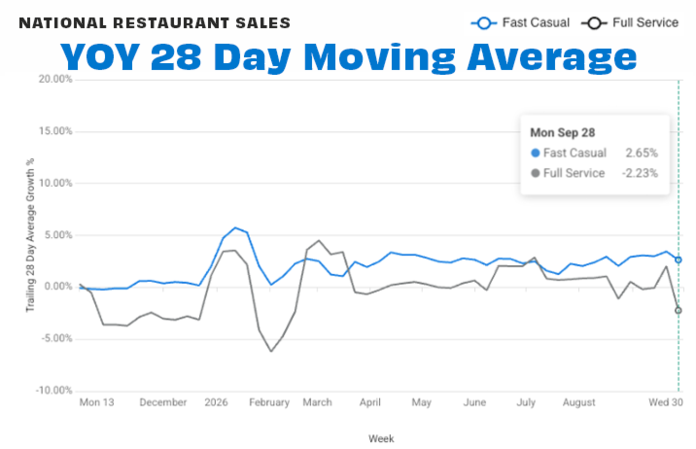
The trailing 4-week (28-day) average of year-over-year (YOY) sales for Fast Casual came in at +2.65% and Full Service at -2.23% at the end of September compared to 2025 sales.
Food costs averaged 29% of sales last month, a slight increase from August.

ITEM TO WATCH
Idaho potatoes, brought to you by MarginEdge Price Checker
Potatoes are the ultimate menu workhorse: fries, mash, baked, hash browns, soup. Which makes this a bad month for a smaller crop. According to MarginEdge's Price Checker, here's where things stand right now:
- Potatoes, Idaho: current median price of $0.67/lb, up 15% from its median price last month and the highest it's been in the past six months (up from a six-month low of $0.52/lb).
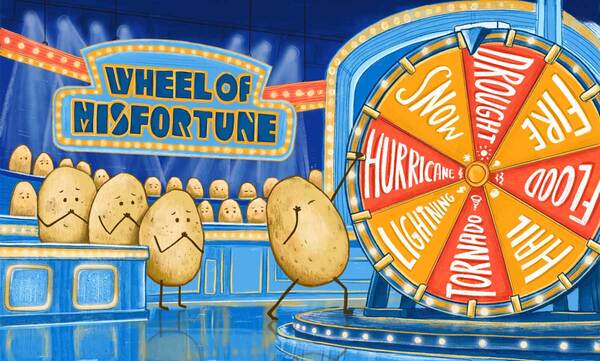
The culprit is a short Idaho harvest. Growers planted fewer acres this year, after last year's rock-bottom prices made potatoes a tough business and then the weather didn't cooperate. According to Capital Press, a mix of frost, summer heat, warm nights and wildfire smoke has hurt yields, though quality is solid. FreshPlaza reports Idaho is on track for its smallest crop since 2011, and one grower-shipper says pricing is the highest he's seen since summer 2023. The potatoes that are coming out of the ground also skew smaller, which matters if your kitchen counts on big bakers or specific fry cuts.
The silver lining: this is a rebound from a very low base, and one grower expects carton prices could ease a bit before year-end. But with a short crop, don't count on a full reversal.
If potatoes are load-bearing on your menu (fries, loaded bakers, mashed sides, breakfast hash), now's a good time to re-cost those items against your latest invoices, and to ask your rep about sizing and pack options before the holiday rush. Potato-heavy sides tend to be low-cost, high-margin plates, so it's worth knowing exactly how much of that margin you're keeping.
Also on the move in September (month-over-month change in median price, per the Price Checker):
- Up: Blueberries +42% ($4.40/pint), green onions +34% ($4.96/lb), Roma tomatoes +23% ($1.31/lb), iceberg lettuce +22% ($2.06/lb), limes +19% ($1.48/lb)
- Down: Eggs -26% ($1.25/dozen), pizza dough -15%, flank steak -11%, avocados -10%
And a quick callback to last month: eggs, which jumped 37% to $1.70/dozen in August on bird flu worries, have already given nearly all of it back. A good reminder that not every spike deserves a menu change.
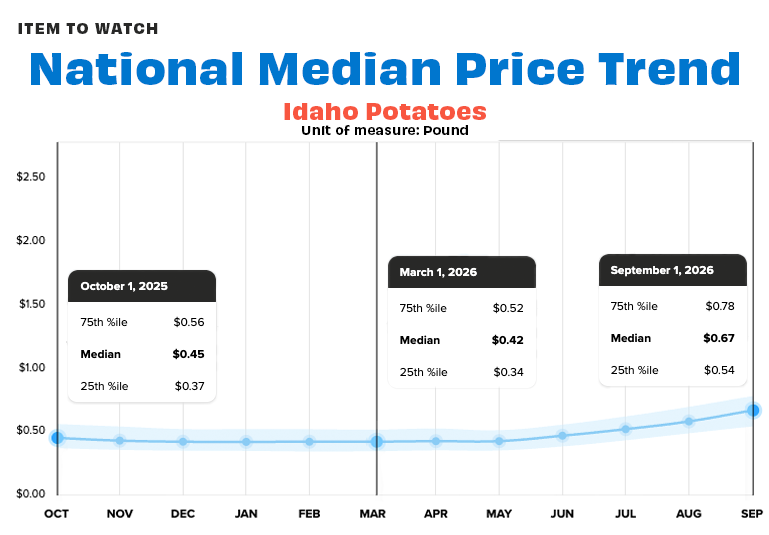
The MarginEdge Price Checker (labs.marginedge.com/price-checker) is a free tool that shows how restaurant ingredient costs are trending nationally and by region, using aggregated, anonymized data pulled from 12,000+ restaurants and 35,000+ vendors on MarginEdge's platform. Anyone can search a specific item to see its current median price and recent trend, or browse the Price Index to see the biggest movers across the industry that month.
.png?width=599&height=399&name=Image%20Compression%20%F0%9F%8E%A1%20(7).png)
CFO 1 Source | New Orleans, LA
ASK [me] ANYTHING
What's the tl;dr on prime cost, and why check it daily?
If you only get to watch one number in your restaurant, make it this one. Prime cost is your total cost of goods sold (food, beverage and paper) plus your total labor (wages, payroll taxes and benefits). It's your biggest controllable expense, and for most operators, it eats up 55% to 65% of every sales dollar.
| Concept | Typical prime cost target |
| Full Service | 60-65% of net sales |
| Fast Casual | 55-60% of net sales |
The problem is timing. Most operators don't see their prime cost until weeks after the period closes, which is like checking the score after the game is over. With a third of operators reporting they weren't profitable in the first half of the year, catching drift early matters.
Here's the quick-and-dirty version of a daily check:
- Get yesterday's numbers automatically. Sales and labor should flow in from your POS and scheduling system each night, and invoices should be captured as they arrive (not at month-end), so your food cost isn't a blind spot.
- Look at one number: prime cost as a % of yesterday's sales. It won't be perfectly final (invoices may lag by a day), but a directionally accurate number today beats a perfect one three weeks from now.
- Set two or three alerts, not twenty. For example, flag any day food cost tops 32% of sales or labor runs 2+ points over target. If everything triggers an alert, nothing feels urgent.
- Spend 15 minutes on it before the lunch rush. One bad day is usually a big produce order landing early. Three bad days in a row is a signal: a vendor price increase you haven't caught, or a schedule that's overstaffing slow shifts.
Weekly is the bare minimum if daily isn't feasible yet. Monthly is too slow for the number that decides whether you make money.
💬 Ask [me] anything!
Really. Each month we’ll take a look at the questions we get and answer one here. Have a question about our product, accounting, or restaurant operations in general? 💌 Email me or message us on our social media channels.
Thompson Italian | Alexandria, VA
THE ECONOMY
Inflation
The September 2026 Consumer Price Index (CPI) report is in, and indicates the following month-over-month changes in food inflation:
- Overall Food Inflation: Same as August, and up 2.5% YOY.
- Food At Home: Down 0.1% from August, and up 1.8% YOY.
- Food Away from Home: Up 0.3% from August, and up 3.4% YOY.
- Limited Service Meals: Up 0.2% from August, and up 3.2% YOY.
- Full Service Meals: Up 0.3% from August, and up 3.8% YOY.
Headline inflation rose to 3.7% year over year, its highest since May, driven by a 9.1% jump in gas prices. Groceries dipped 0.1% as beef and dairy fell, but menu prices kept climbing, and with the Fed meeting October 27-28, rates are one more reason to watch your margins.
Tl;dr - Food prices were flat, but restaurant prices are up 3.5% year over year (groceries just 1.8%), so the gap between eating out and eating in keeps widening.

Chef Geoff's | Washington, DC
'TIS THE SEASON
Your Q4 game plan: staffing up and booking the holidays
Halloween is a Saturday, Thanksgiving is November 26, and after that it's a straight shot to New Year's. If you're hoping to make the holiday season count, the next few weeks are make-or-break.
First, some big news in the catering world. On October 6, Uber announced a deal to acquire ezCater for $2.3 billion. ezCater connects more than 140,000 restaurants with workplace customers, generated over $2.5 billion in bookings in the last twelve months and sees average orders north of $400. Uber is pitching it as a way to help restaurants win bigger orders, but as NRN's Restaurant Daily podcast noted, operators who use both Uber Eats and ezCater are already asking what happens to their commissions once the two combine. The deal is expected to close in the coming months, so the fine print is still tbd.
Corporate catering and group orders are clearly still a growth channel worth protecting, so it's best to think about keeping your own direct ordering and event-booking options strong and keep an eye on how that commission situation develops.
Now, your Q4 checklist:
- Hire now, not in November. Industry best practice is to start recruiting 60 to 120 days before your rush, and for the holidays that window starts in September (better late than never!). Turnover is also a factor: hospitality workers quit at about 4.5% a month, more than double the rest of the economy. If you want to snag motivated talent faster, you could consider putting the pay on the posting with a dated hiring day for on-the-spot offers.
- Package your holiday events. Guests comparing venues are looking for clear and polished expectations, not just "we do private events." Think a private or semi-private space plus passed apps, dinner and a beverage package, with an early-booking incentive to get commitments on the books faster.
- Think beyond the big dinner. Lunch events, smaller private dining experiences and employee appreciation gatherings are easier to book, and you can market "delayed" holiday parties for January to fill the post-rush lull.
- Track bookings as their own forecast line. Confirmed events should show up in your weekly P&L process as forecasted revenue, so you can schedule labor and order product against real numbers instead of last year's gut feel.
- Re-cost your holiday menu now. Between potatoes, tomatoes and everything else in this month's edition, a menu priced in August may not hold up in December. It's always good to do a quarterly check on your stars, plowhorses, puzzles and dogs!
What's [me] into😂 WHAT WE'RE LAUGHING AT
📖 WHAT WE'RE READING
🎧 WHAT WE'RE LISTENING TO
|
